


Riddles Test - 500 Brain Games
4.34.01K Reviews
App Specs
- Version
- 27
- Updated On
- License
- Free
- Downloads
- 1,000,000+
- Developer
- Idle Boots
- Categories
- Trivia
- Platform
- Android
Screenshots
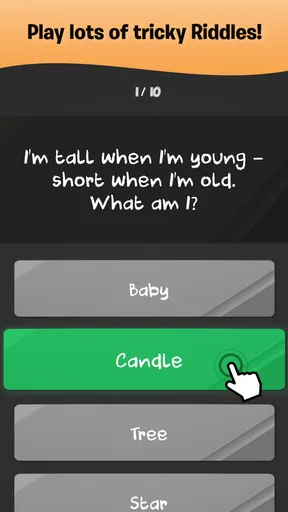
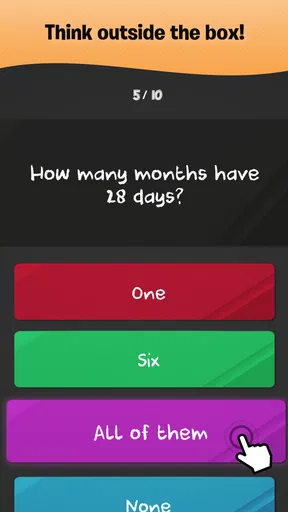
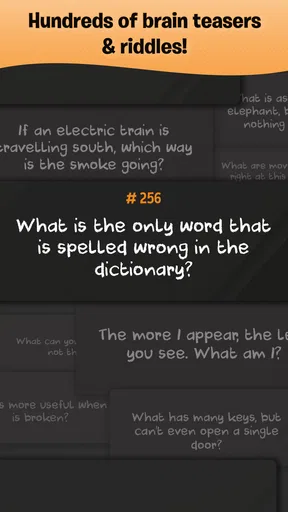
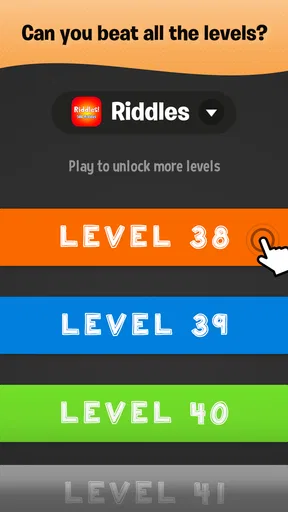
 Analysis by AppCompare
I like trivia games that make me think without demanding a long session, and Riddles Test - 500 Brain Games fits that narrow space well. It is a free Android trivia game from Idle Boots, built around riddles, tricky puzzles, and IQ-style challenges rather than general-knowledge quizzes. After spending time with it, I see it less as a serious intelligence test and more as a compact collection of lateral-thinking problems for short breaks.
That distinction matters before you install it. If you want a relaxing game that gives your brain something unusual to chew on while waiting for an appointment, commuting, or taking a break from work, this is an easy recommendation. If you want competitive trivia, deep explanations, carefully measured cognitive training, or a polished multiplayer experience, you should look at another kind of app instead.
What I considered before recommending it
My first decision criterion was the type of thinking the game encourages. The challenges are not simply questions where I either remember a fact or do not. Many rely on wording, assumptions, visual interpretation, or the willingness to question the obvious answer. That makes the experience feel different from a standard quiz app, even though both are placed in the trivia category.
The second criterion was how well it works in ordinary life. A puzzle game like this needs to be easy to pick up, understandable without a long tutorial, and satisfying in a few minutes. I found that its strongest use is not as a game I would plan an entire evening around. It works better as a collection I can open when I have a little attention available but not enough time for a larger game.
I also paid attention to fairness. Riddles can be clever, but they can also become frustrating when the answer depends on an obscure interpretation or on guessing what the writer intended. That is one of the main trade-offs here: the surprise of a trick question is enjoyable when the wording supports the answer, but less satisfying when the solution feels like a technicality.
Finally, I considered whether the app suits different ages and comfort levels. It carries an Everyone content rating, so it is positioned as a broadly accessible choice. I would still judge individual puzzles by the reader’s patience and reading ability, because the challenge often comes from interpreting a sentence carefully rather than from fast reflexes.
The basic experience is deliberately simple
The game’s appeal comes from its focused format. I open it, read a puzzle, form an answer, and move on to the next challenge. There is no need to learn a complicated control scheme or understand a large fictional world first. That simplicity is valuable on a phone, especially when I want mental stimulation without the setup associated with a larger title.
Worth Reading Before You Choose

EA SPORTS FC Mobile 26 Is a Bigger Football Game, but It Takes Time

Flipboard Shows What News Apps Must Do Beyond the Feed

Switching to Android Auto Means Rethinking Your Driving Routine

Google Calendar Makes a Crowded Week Easier to Manage

Ludo King Makes the Most of the Minutes Between Plans

Baby Panda World Brings Quick Play to Modern Phones, but Its Game Library Feels Busy
The short-description label, “Riddles Test,” is a fair summary of the central idea, but it does not fully express the difference between these puzzles and ordinary trivia. The best moments happen when I answer too quickly, realize I have accepted a hidden assumption, and then reread the question from another angle. That small mental reset is the real hook.
I would not describe every puzzle as equally difficult. Some are approachable and give me an immediate sense of progress, while others depend on a particular turn of phrase. That unevenness is normal for a mixed riddle collection, but it means the game’s rhythm can change from satisfying to irritating quite quickly. I recommend treating a difficult question as a prompt to slow down, not as proof that the game is testing advanced reasoning.
Where this game wins against ordinary quiz apps
The clearest advantage is that it tests flexibility more than recall. In a conventional trivia app, I may know an answer because I have seen the fact before. Here, success often comes from noticing what the question carefully avoids saying. That makes it a better choice for someone who enjoys wordplay, misleading assumptions, and “think again” moments.
It is also more suitable for solo play than a quiz designed around live competition. I do not need to compare my score with another person to enjoy a good riddle. That makes it useful during quiet downtime, especially when I want a distraction that feels more active than scrolling but less demanding than a full game.
Another strength is its conversation value. I can give a puzzle to a friend or family member and watch how quickly they commit to the obvious answer. The game can become a small social activity without requiring everyone to install the same competitive platform or agree on a long play session. For parents, that can make selected challenges useful as casual conversation starters, although I would still choose puzzles appropriate to the child’s reading level.
The best way to play is to challenge your first answer instead of chasing speed. I read the wording twice, identify the assumption I am making, and ask whether the question is testing a fact or my interpretation. This simple habit improves the experience and is more useful than rushing through the collection.
Three practical ways I would use it
My favorite everyday scenario is a short waiting period. If I have ten minutes before an appointment, I can attempt a few puzzles without needing headphones, a large screen, or a stable group of players. Even when I fail, the question often stays in my mind longer than a disposable arcade round because I am trying to understand the trick.
A second use is as a warm-up before studying or creative work. I would not claim that it replaces a learning method, but solving a few language-based problems can help me shift from passive phone use into more deliberate attention. I find this particularly useful when I am stuck in a habit of checking social feeds and want a more focused alternative.
A third use is to play collaboratively without turning it into a formal competition. One person reads the puzzle aloud, everyone suggests an answer, and then the group discusses why the intended solution works. This is where the game can be more enjoyable than a private score chase. The discussion exposes different assumptions, which is often more interesting than simply seeing whether one person was correct.
There is also a useful personal workflow for difficult questions. I first answer naturally, then write down the exact words that led me there, and finally look for a second interpretation. If I am still stuck, I take a break rather than repeatedly tapping at the same problem. That prevents the collection from becoming an exercise in frustration and helps preserve the surprise when I return to it.
What may frustrate regular players
The same trick-based design that makes the game distinctive can also be its weakest point. A riddle can feel brilliant when the answer is supported by the wording, but it can feel arbitrary when the solution depends on a narrow reading I would never reasonably choose. Players who prefer transparent rules may find that inconsistency more annoying than entertaining.
The game is also not the right substitute for a structured brain-training program. I would not use it to track improvement, diagnose reasoning ability, or make claims about intelligence. It offers puzzles for amusement and mental engagement, not a formal assessment. The “IQ test” framing should therefore be taken lightly: the result reflects how well I understand each riddle’s intended trick, not a complete measure of cognitive ability.
Another limitation is replay value. Once I know the answer to a riddle, the surprise is gone. I can still share it with someone else, but I cannot recreate the first attempt for myself. That makes the game more like a finite puzzle book than an endlessly changing trivia service. Readers who need fresh daily content or an evolving challenge may move on sooner than those who enjoy revisiting favorite questions with friends.
I would also avoid expecting rich subject variety in the way a general-knowledge quiz provides it. This is about the form of the question and the twist in the answer, not about building a broad store of facts across history, science, sport, or culture. If your goal is to learn factual material, a dedicated educational quiz will be a better fit.
How it compares with the alternatives I would choose
Compared with ordinary trivia quizzes, this game wins when I want interpretation rather than memorization. A general quiz is better for checking what I know and gradually discovering new facts. Riddles Test is better when I want to question the wording itself. Neither category is superior; they serve different moods and different definitions of “brain game.”
Compared with crossword puzzles or word games, it offers less of a long-form solving process. A crossword rewards building a network of answers and returning to clues over time. Here, each challenge is more self-contained. I would choose the crossword when I want a sustained activity and this game when I want a sequence of separate mental jolts.
Compared with visual puzzle games, the emphasis here is more linguistic and conceptual. A visual title may suit someone who enjoys patterns, shapes, or spatial manipulation. This game is a stronger choice for readers who notice double meanings and enjoy arguing with the wording of a question. That difference is important for anyone who tends to lose interest when a puzzle depends mainly on visual timing.
Compared with multiplayer quiz platforms, this is the calmer option. It does not need the pressure of a countdown or the energy of a live room to be enjoyable. On the other hand, players who need social competition, rankings, or a reason to return every day may find a multiplayer alternative more motivating.
The cost of switching between these categories is mostly a change in expectation rather than money. Since this game is free, trying it does not require a paid commitment. The real cost is attention: if you install it expecting a constantly refreshed competitive service, you may spend time forcing it into a role it was not designed to fill. I would decide based on the kind of thinking I want, not simply on the fact that it costs nothing.
Device and access considerations
The game was released on September 20, 2017, and its current version is 27. It requires Android 5.1 or later, which makes it accessible on a wide range of older compatible phones as well as newer devices. That is helpful if you want a lightweight puzzle option for a secondary phone or an older handset, although actual smoothness can still depend on the device and its software condition.
Its popularity gives me some confidence that the basic concept has found an audience: it has passed one million installs, with an average rating of 4.3 from around forty thousand ratings and roughly four thousand written reviews. I treat those figures as a sign of broad interest rather than a guarantee that every riddle will match my taste. Puzzle preferences are unusually personal, especially when humor and wording are involved.
Because the price is free, the decision is straightforward for curious readers: install it when you want a low-commitment collection of solo riddles, and remove it if the answer style repeatedly feels arbitrary. I would not make the decision based only on the rating. The more important question is whether you enjoy having your first interpretation challenged.
Who should install it, and who should skip it
I recommend it to casual puzzle fans, families looking for a simple discussion game, and anyone who likes short sessions with a verbal twist. It is especially suitable for people who enjoy saying, “Wait, read that question again,” because that reaction is central to the experience. It can also work for adults who want a small break from passive phone use without committing to a demanding strategy game.
I would skip it if you dislike trick questions, become annoyed when an answer depends on wording, or want measurable progress toward a clearly defined skill. I would also choose another app if my main goal were factual learning, competitive play, visual pattern solving, or a continuously updated challenge. Those needs call for different categories, and no amount of goodwill toward this collection changes that.
For younger players, the Everyone rating makes the game broadly approachable, but I would play alongside them when a puzzle’s wording is difficult. The shared discussion is often more valuable than letting a child struggle alone with an answer that depends on an adult interpretation of language.
My final recommendation
After using it as a short-session puzzle game, I see Riddles Test - 500 Brain Games as a good free choice for curious, patient players who enjoy lateral thinking. Its strongest feature is not complexity; it is the small mental interruption that makes me reconsider an assumption. Idle Boots has kept the idea focused enough to be useful during spare moments, and the Android requirements make it practical for many older devices.
My recommendation comes with one clear condition: approach it as entertainment, not as a scientific IQ measure or a complete brain-training system. The collection is most enjoyable when I accept that some riddles will delight me and others may feel too dependent on their intended wording. I also recommend playing slowly, discussing the puzzles with someone else, and taking breaks from any question that stops being fun.
If you want a free, accessible solo trivia game built around clever riddles rather than facts, this is worth trying. If your ideal alternative involves competition, structured learning, visual puzzles, or endless new content, choose that category instead. For the right player, this app turns a few idle minutes into a surprisingly engaging test of attention—and that is a modest goal, but one it generally meets well.
Pros
- 500 puzzles provide plenty of content for extended play.
- Covers different riddle styles
- helping keep challenges varied.
- Useful for short gaming sessions when you have a few spare minutes.
- Can help exercise logic
- memory
- and lateral-thinking skills.
- Suitable for solo play without requiring an internet connection.
Cons
- Some riddles may feel too easy for experienced puzzle players.
- Difficulty can vary noticeably between consecutive questions.
- Hints or answer reveals may reduce the challenge for some users.
- Repeated puzzle formats could become predictable over time.
- Ads or in-app purchases may interrupt the playing experience.
FAQs for Riddles Test - 500 Brain Games
What is Riddles Test - 500 Brain Games?
Riddles Test - 500 Brain Games is a puzzle and brain-training app built around a large collection of riddles, logic questions, word challenges, and trick problems. The questions are designed to test how carefully you read clues and how creatively you think, rather than relying only on general knowledge. It is suitable for short play sessions, casual entertainment, and anyone who enjoys solving progressively challenging brain teasers.
How does the gameplay work?
The app presents one riddle or brain game at a time, usually with a question that requires you to choose or enter the correct answer. You can move through the available challenges at your own pace and use hints when a puzzle is difficult. Some answers depend on wordplay or interpreting the wording carefully, so reading every detail is important. The simple format makes it easy to start playing without a complicated tutorial.
Is Riddles Test - 500 Brain Games suitable for children?
The game can be enjoyable for older children, teenagers, and adults, especially when played together with family or friends. However, the difficulty and wording of individual riddles may vary, and some challenges require reading comprehension, vocabulary, or abstract reasoning. Parents should review the app’s age rating and store description before downloading it for younger children, particularly if advertising, in-app purchases, or external links are available.
Does the app require an internet connection?
Whether all features work offline can depend on the version installed and the platform you use. The core riddles may be available for playing without a constant connection, but internet access can still be required for advertisements, analytics, updates, restoring purchases, or loading certain content. If offline play is important to you, check the app’s current Google Play or App Store listing and test the game after installation.
Are there ads, hints, or in-app purchases?
Many free puzzle apps support development through advertising and may offer optional hints or other paid features. Riddles Test - 500 Brain Games may therefore include ads, and the exact availability of hints, ad removal, or purchases can change between updates and operating systems. Before downloading, review the store page for pricing and purchase information. Also check the app’s permissions and privacy details if you are concerned about advertising or data collection.


